






Gold fundamentals
Gold bar dimensions: published sizes for common bullion bars
Compare published gold bar dimensions from PAMP, Argor-Heraeus, The Royal Mint and Perth Mint. Gold bars of the same weight are not always the same size, and the same refiner can publish more than one size for the same weight.
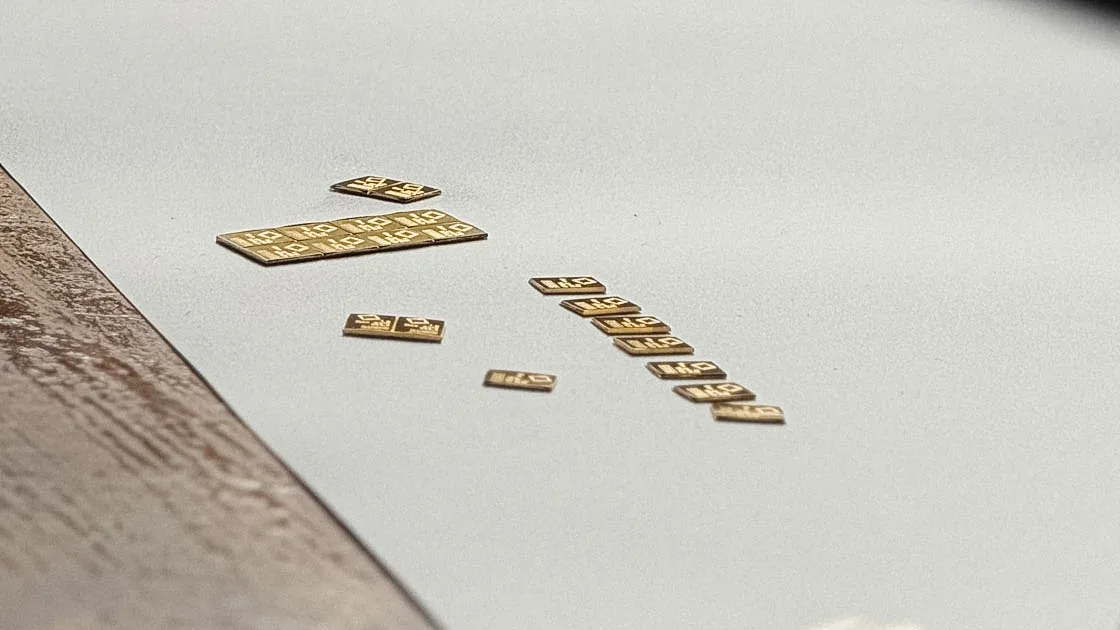
Gold bars of the same weight are not necessarily the same size.
A 1 gram bar from one refiner can differ in length, width or thickness from a 1 gram bar made by another. Products from the same manufacturer can also use different physical formats — and, as the Royal Mint section below shows, a single refiner can have a current product and a superseded product at the same denomination with different published footprints.
There is another complication: manufacturers do not always describe dimensions in the same way.
Some publish three-dimensional bar measurements. Some publish only length and width. Perth Mint explicitly publishes maximum manufacturing dimensions for its minted bars. Dealer listings can also contain measurements that are not available on the refiner’s own current product page.
This guide records the best published figures we could verify, links each one to the page it came from, and states whether the product it describes is still being sold.
Gold bar dimensions table
Dimensions are shown as length × width × thickness where all three measurements are available. Where a refiner publishes only two, we say so rather than filling the gap.
Each row answers three separate questions. Who published the figure, what the figure represents, and which product it describes. A figure can be impeccably sourced and still describe a product you can no longer buy, so the product column says which: a product marked superseded is one the refiner still publishes a figure for but no longer sells, and an unmarked product was on sale when we checked.
Every figure below was read from the publisher’s own page on 8 September 2026. The source column links to that page and, where one exists, to an archived capture of it.
| Refiner | Product | Weight | Published dimensions | Figure type | Source |
|---|---|---|---|---|---|
| PAMP | Lady Fortuna | 2.5g | 19 × 11.5 × 0.6 mm | Refiner-published; pending re-verification | page · archive |
| PAMP | Lady Fortuna | 5g | 22.1 × 13.1 × 0.90 mm | Refiner-published; pending re-verification | page · no archive located |
| Argor-Heraeus | Classic | 1g | 15.0 × 8.7 × 0.5 mm | Refiner-published | page · archive |
| Argor-Heraeus | Classic | 2g | 19.0 × 11.4 × 0.6 mm | Refiner-published | page · archive (partial) |
| Argor-Heraeus | Classic | 5g | 23.0 × 14.0 × 0.9 mm | Refiner-published | page · archive |
| Argor-Heraeus | Classic | 10g | 31.5 × 18.5 × 1.0 mm | Refiner-published | page · archive (partial) |
| Argor-Heraeus | Classic | 1oz | 40.4 × 23.3 × 1.9 mm | Refiner-published | page · archive |
| The Royal Mint | RMR minted bar (superseded) | 1g | 14.70 × 8.90 × 0.40 mm | Refiner-published | page · archive |
| The Royal Mint | RMR minted bar (superseded) | 5g | 23.00 × 14.00 × 0.85 mm | Refiner-published | page · archive |
| The Royal Mint | Britannia minted bar | 1g | 14.9 × 9.15 mm; no thickness published | Refiner-published | page · archive |
| The Royal Mint | Britannia minted bar (superseded) | 1g | 14.7 × 8.9 mm; no thickness published | Refiner-published | page · archive |
| The Royal Mint | Britannia minted bar | 5g | 23.2 × 14.2 mm; no thickness published | Refiner-published | page · archive |
| The Royal Mint | Britannia minted bar (superseded) | 5g | 23 × 14 mm; no thickness published | Refiner-published | page · archive |
| The Royal Mint | Britannia minted bar | 10g | 25.7 × 15.7 mm; no thickness published | Refiner-published | page · archive |
| The Royal Mint | Britannia minted bar (superseded) | 10g | 25.5 × 15.5 × 1.37 mm | Refiner-published | page · archive |
| The Royal Mint | Britannia minted bar | 1oz | 49.8 × 28.8 mm; no thickness published | Refiner-published | page · archive |
| The Royal Mint | Britannia minted bar (superseded) | 1oz | 50.14 × 29.16 mm; no thickness published | Refiner-published | page · archive |
| Perth Mint | Kangaroo minted bar | 1g | max. 15.60 × 9.10 mm; max. rim thickness 1.30 mm | Maximum specification | page · archive |
Where these figures come from
Argor-Heraeus publishes bar and blister dimensions separately, and its current Classic product pages carry all three bar dimensions. Its 1g Classic is 15.0 × 8.7 × 0.5 mm, its 2g Classic is 19.0 × 11.4 × 0.6 mm, its 5g Classic is 23.0 × 14.0 × 0.9 mm, its 10g Classic is 31.5 × 18.5 × 1.0 mm, and its 1oz Classic is 40.4 × 23.3 × 1.9 mm.
The Royal Mint publishes a bar size and a bar thickness on its archived Royal Mint Refinery pages: the RMR 1g minted bar at 8.90 mm × 14.70 mm with a bar thickness of 0.40 mm, and the RMR 5g minted bar at 14.00 mm × 23.00 mm with a bar thickness of 0.85 mm. Both pages sit in the Mint’s archived-bars section and both are flagged as no longer available.
The Royal Mint’s current Britannia minted bars publish a bar size but no bar thickness: the Britannia 1g bar at 14.9 × 9.15 mm, the Britannia 5g bar at 23.2 × 14.2 mm, the Britannia 10g bar at 25.7 × 15.7 mm, and the Britannia 1oz bar at 49.8 × 28.8 mm.
Perth Mint requires different wording. Its current 1g Kangaroo minted gold bar is listed at a length of 15.60 mm, a width of 9.10 mm and a maximum thickness of 1.30 mm, with all three values asterisked. Perth’s footnote explains that the figures represent the bar’s maximum possible rim thickness, length and width under its manufacturing tolerances, and that all dimensions in a single bar cannot be maximum.
PAMP is the weakest row in this table, and we would rather say so than dress it up. PAMP’s pages for the Lady Fortuna 2.5g bar and the Lady Fortuna 5g bar are live, but the specification tables on them are rendered in the browser rather than served in the page source, and the one archived capture we located does not contain the specification table either. The figures shown — 19 × 11.5 × 0.6 mm at 2.5g and 22.1 × 13.1 × 0.90 mm at 5g — are carried over from an earlier reading of those pages and could not be re-read on the date of this check. Their product listings are live, so this is not a question about which bar PAMP sells — it is a question about whether our two figures are right, and the table marks them pending re-verification for that reason.
There is no universal size for a 1 gram gold bar
One gram tells you how much the bar weighs. It does not determine its physical dimensions.
Argor-Heraeus publishes its current 1g Classic at 15.0 × 8.7 × 0.5 mm. The Royal Mint publishes its current Britannia 1g minted bar at 14.9 × 9.15 mm, without a thickness figure. Perth Mint gives a maximum footprint of 15.60 × 9.10 mm for its current 1g Kangaroo, with a maximum rim thickness of 1.30 mm.
They are all 1 gram gold products, but their published physical specifications are not identical.
So a description such as “1g gold bar” does not by itself establish a standard length, width or thickness.
The same refiner can publish two footprints for the same weight
The point above is usually made across refiners. The Royal Mint makes it within a single brand, at four denominations.
At 1 gram, the Mint’s current Britannia minted bar is published at 14.9 × 9.15 mm, while the earlier Britannia listing gives 14.7 × 8.9 mm — the same footprint as the archived RMR 1g bar.
At 5 grams, the current Britannia bar is 23.2 × 14.2 mm, against 23 × 14 mm on the earlier listing and 23.00 × 14.00 mm on the archived RMR bar.
At 10 grams, the current Britannia bar is 25.7 × 15.7 mm, against 25.5 × 15.5 × 1.37 mm on the earlier listing.
At 1 ounce, the current bar is 49.8 × 28.8 mm, against 50.14 × 29.16 mm on the earlier listing.
The differences are small — a few tenths of a millimetre — but they are not rounding artefacts of our own making. They are two different figures published by the same mint for the same denomination, and only one of them describes the product currently on sale.
A published Royal Mint footprint is only useful once you know which listing it came from.
Where 25.5 × 15.5 mm belongs
A footprint of 25.5 × 15.5 mm circulates in secondary listings, sometimes attached to a Royal Mint 5 gram bar. On the Mint’s own pages it belongs to the earlier Britannia 10 gram minted bar, published as 25.5 mm × 15.5 mm with a bar thickness of 1.37 mm. That page is flagged no longer available; the current Britannia 10g bar is published at 25.7 × 15.7 mm.
So the figure is real, refiner-published, and attached to the wrong denomination when it appears against a 5 gram bar. It is a 10 gram measurement describing a superseded product.
It is also the only Royal Mint Britannia listing in this table that publishes a thickness, which is why it appears in the methodology note below.
Even manufacturer-published dimensions need context
A manufacturer’s figure is usually the best place to start, but it still matters how the manufacturer describes it.
Perth Mint is a particularly clear example. For its 1g Kangaroo minted gold bar, Perth lists a length of 15.60 mm, a width of 9.10 mm, and a maximum thickness of 1.30 mm.
But Perth does not present those three values as the dimensions of one rectangular specimen. Its own footnote explains that they represent maximum possible rim thickness, length and width under its manufacturing tolerances, and that all dimensions cannot be maximum in one bar.
That qualification matters. A secondary listing that reproduced only “15.6 × 9.1 × 1.3 mm” would omit part of the meaning of the manufacturer’s specification.
For that reason, this guide preserves terms such as maximum rather than converting every manufacturer’s data into the same format.
Length and width can be easier to interpret than thickness
Thickness deserves particular care.
A minted gold bar does not necessarily have one completely uniform thickness across its entire surface. Designs can include raised rims and relief.
Perth Mint explicitly refers to rim thickness in its current minted-bar specification. The Royal Mint labels its own figure bar thickness.
Other refiners simply publish three dimensions without explaining the measurement convention in the same level of detail, and the Royal Mint’s current Britannia pages omit thickness altogether.
That does not make those figures unreliable. It means the wording around a thickness figure should be retained rather than stripped away.
PAMP’s 2.5g and 5g bars show that footprint and weight are separate questions
PAMP’s Lady Fortuna 2.5g bar has been published at 19 × 11.5 × 0.6 mm and its Lady Fortuna 5g bar at 22.1 × 13.1 × 0.90 mm. The denomination changes, and so do the dimensions.
Both figures carry the caveat set out above: they come from an earlier reading of PAMP’s product pages that we could not repeat at this check, and the table marks them pending re-verification.
The 2.5g bar is also the clearest case in this guide of a brand and a weight not identifying a single physical object. Bullion sellers have published a second, larger PAMP 2.5g footprint, and we have not found primary PAMP documentation explaining how the two relate. What each figure rests on, and how to tell which bar you have, is a page of its own: our PAMP 2.5 gram bar dimensions article.
For older or discontinued products generally, dealer records can be useful supplementary evidence, provided they are labelled as dealer data rather than attributed to the manufacturer without a primary source.
More than one physical specification has been published for PAMP-branded 2.5g gold bars, so identify the exact product before relying on dimensions for fit.
Bar dimensions and assay-card dimensions are different
A minted bullion product sold in assay packaging has at least two separate physical dimensions worth distinguishing: the gold bar itself, and the complete packaged product.
Argor-Heraeus publishes both. Its current 1g Classic bar measures 15.0 × 8.7 × 0.5 mm, while its blister is 85 × 55 mm. Its current 5g Classic is 23.0 × 14.0 × 0.9 mm, while the blister is again 85 × 55 mm.
So packaging dimensions cannot be inferred from the dimensions of the metal.
Likewise, knowing the dimensions of an assay card does not tell you the dimensions of the bar inside it. Whether taking the bar out of that card costs you anything at resale is a separate question, and we answer it in our assay card article.
Why our table separates publisher, figure type and product
Three questions need separate answers. Who published the number? What does that number represent? And which product does it describe? A figure can score well on one and badly on another, so we record them independently rather than collapsing them into a single verdict.
The first two questions produce these labels.
- Refiner-published - the figure appears in material published by the manufacturer itself. We preserve qualifications supplied by the manufacturer.
- Dealer-published - the figure comes from a bullion dealer or distributor rather than from a manufacturer source we have verified. Dealer figures can be useful for discontinued or historical products, but they should not be presented as manufacturer specifications. No row in this table currently carries this label.
- Maximum specification - the manufacturer explicitly describes the figure as a maximum or manufacturing limit. Perth Mint is the clearest example in this guide.
- Measured - we reserve this label for physical specimens measured directly by us. There are currently no Assay Atelier measurements in this table.
The third question is answered in the product column. A product marked superseded is one the refiner still publishes a figure for but flags as no longer available, or files under archived products. An unmarked product was on sale on the date we checked, which is not the same as the refiner confirming that its specification is its latest revision. Where we could not re-read a figure at all, the figure-type cell says pending re-verification — that is a statement about our evidence, not about the product.
Product generations matter too
Manufacturers can redesign bullion products while retaining the same denomination.
Argor-Heraeus currently describes its Classic range as a new generation with redesigned reverse, certificate and packaging, while noting an unchanged front.
That does not necessarily mean the bar’s external dimensions changed.
It does demonstrate why a brand name and weight do not always identify every physical characteristic of a product across time — and the Royal Mint footprints above show what it looks like when the dimensions do change.
What to check before buying any gold bar holder
- Identify the exact manufacturer and product, not only the denomination.
- Check whether the published dimensions refer to the bar or the packaging.
- Check whether the product is still on sale. A refiner-published figure for a discontinued bar tells you nothing reliable about the one in your hand.
- Where thickness is given, retain qualifications such as maximum, rim thickness or approximately.
- For discontinued products, check whether the dimensions come from the refiner itself or from a secondary dealer record.
- Where multiple product generations exist, do not assume dimensions are unchanged without supporting information.
Do not rely on weight alone when physical fit matters.
Frequently asked questions
What are the dimensions of a 1 gram gold bar?
There is no universal size. Argor-Heraeus publishes its current 1g Classic at 15.0 × 8.7 × 0.5 mm. The Royal Mint publishes its current Britannia 1g minted bar at 14.9 × 9.15 mm with no thickness figure, and published its archived RMR 1g bar at 14.70 × 8.90 × 0.40 mm. Perth Mint publishes maximum dimensions of 15.60 × 9.10 mm with a maximum rim thickness of 1.30 mm for its current 1g Kangaroo.
Are all 1g gold bars the same size?
No. Gold-bar denomination describes weight, not a standardized external format, and the same refiner can publish different footprints for the same denomination across product generations — compare the Royal Mint’s current Britannia 1g bar with its earlier listing.
What size is a PAMP 5g Lady Fortuna gold bar?
PAMP has published its Lady Fortuna 5g at 22.1 × 13.1 × 0.90 mm, subject to the same caveat.
What size is an Argor-Heraeus 1g gold bar?
Argor-Heraeus publishes its current 1g Classic gold bar at 15.0 × 8.7 × 0.5 mm. The blister is separately listed at 85 × 55 mm.
What size is an Argor-Heraeus 5g gold bar?
The current 5g Classic is published at 23.0 × 14.0 × 0.9 mm.
What size is a Royal Mint 1g gold bar?
It depends which one. The current Britannia 1g minted bar is published at 14.9 × 9.15 mm, with no thickness figure on the product page. The earlier Britannia 1g listing gives 14.7 × 8.9 mm, and the archived Royal Mint Refinery 1g minted bar is published at 14.70 × 8.90 × 0.40 mm. If you are matching a bar to a holder, establish which of the three you actually own.
Is a Royal Mint 5g gold bar 25.5 × 15.5 mm?
No. On the Mint’s own pages, 25.5 × 15.5 mm with a 1.37 mm bar thickness is the earlier Britannia 10 gram bar. The current Britannia 5g bar is published at 23.2 × 14.2 mm, and the archived RMR 5g bar at 23.00 × 14.00 × 0.85 mm.
Are gold bar dimensions exact?
Not necessarily. They may be manufacturer specifications rather than measurements of an individual specimen, and some manufacturers explicitly publish maximum dimensions subject to manufacturing tolerances.
Are assay cards all the same size?
No universal assay-card size should be assumed. Argor-Heraeus, for example, publishes an 85 × 55 mm blister for its 1g Classic and its 5g Classic alike.
Can dimensions prove that a gold bar is genuine?
No. Matching published dimensions does not establish authenticity, and a dimensional difference does not by itself prove a bar is counterfeit.
Methodology note: published thickness against volume-implied thickness
For every row where a refiner publishes all three dimensions, you can check the thickness figure against the thickness a rectangular block of that footprint would need in order to hold that much gold. Volume is weight divided by density, and thickness is volume divided by length × width. We use 19.32 g/cm³ for fine gold; the differences below move by less than 0.001 mm if you use 19.30 instead.
The table includes every thickness figure that was live on a publisher’s own page when we checked it, whether the product is current or superseded. One figure falls outside that rule and is discussed below.
Every published thickness sits above the volume-implied figure, which is what you would expect from raised rims and relief on a minted bar. What is interesting is how much above, and how consistently.
| Refiner | Product | Published thickness | Volume-implied | Difference |
|---|---|---|---|---|
| PAMP | Lady Fortuna 2.5g | 0.60 mm | 0.592 mm | +0.008 mm |
| PAMP | Lady Fortuna 5g | 0.90 mm | 0.894 mm | +0.006 mm |
| Argor-Heraeus | Classic 1g | 0.5 mm | 0.397 mm | +0.103 mm |
| Argor-Heraeus | Classic 2g | 0.6 mm | 0.478 mm | +0.122 mm |
| Argor-Heraeus | Classic 5g | 0.9 mm | 0.804 mm | +0.096 mm |
| Argor-Heraeus | Classic 10g | 1.0 mm | 0.888 mm | +0.112 mm |
| Argor-Heraeus | Classic 1oz | 1.9 mm | 1.710 mm | +0.190 mm |
| The Royal Mint | RMR 1g (superseded) | 0.40 mm | 0.396 mm | +0.004 mm |
| The Royal Mint | RMR 5g (superseded) | 0.85 mm | 0.804 mm | +0.046 mm |
| The Royal Mint | Britannia 10g (superseded) | 1.37 mm | 1.310 mm | +0.060 mm |
The pattern is refiner-level rather than size-level. PAMP and the Royal Mint publish thickness figures within 0.06 mm of the volume-implied value, and in three of five cases within 0.01 mm. Argor-Heraeus sits between 0.096 mm and 0.190 mm above it, at every one of its five denominations.
What that pattern does and does not show
One confound is worth naming before anyone leans on this. Argor-Heraeus publishes thickness to one decimal place, while PAMP and the Royal Mint publish to two. A coarser grid pushes figures further from any underlying value, so part of the gap is reporting granularity rather than metal.
It does not account for all of it. Rounding 0.397 mm to one decimal place gives 0.4 mm, not the 0.5 mm Argor publishes, and the same holds at 2g, 5g, 10g and 1oz. The offset is larger than the reporting grid can explain, and it is consistent in direction and rough magnitude across the whole range.
The likeliest reading is a difference in measurement convention — where on the bar each refiner takes its thickness figure, and how much rim it includes — not a difference in how much gold you get. The gold content is set by weight and fineness, both of which are stated separately.
This is arithmetic on published figures, not a measurement. It tells you something about how these four refiners describe their products. It does not tell you the true thickness of any individual bar, and it should not be used to judge whether a bar in your hand is genuine.
Perth Mint is excluded from the comparison because its figures are explicitly maximums under manufacturing tolerance rather than nominal dimensions, and the Royal Mint’s current Britannia bars are excluded because their product pages publish no thickness at all.
One Royal Mint figure cuts against the pattern and we would rather name it than quietly drop it. A 2021 capture of the earlier Britannia 1oz page carries a bar thickness of 1.49 mm against its 50.14 × 29.16 mm footprint — 0.389 mm above the volume-implied 1.101 mm, further out than any Argor-Heraeus figure. The live page no longer publishes a thickness at all, so the figure sits outside the inclusion rule above rather than being excluded for being inconvenient. Taken on its own it would put the Royal Mint at both ends of the range, and anyone leaning on the refiner-level reading should know that.
About this data
We prefer current primary manufacturer specifications wherever they are available.
We identify dealer data separately, preserve manufacturer qualifications such as maximum thickness, and record whether the product a figure describes is still on sale.
We do not infer missing dimensions. We do not convert published dimensions into manufacturing tolerances. We do not describe a figure as measured unless we physically measured the specimen ourselves. Where we could not re-read a source, we say so in the row rather than leaving the figure looking verified.
Product specifications can change, so dimensions should be rechecked against the source when exact physical fit is important.
Every figure in this article links to the publisher’s own page and, where a capture exists, to an archived copy of it. All pages were checked on 8 September 2026. Two Argor-Heraeus captures are partial — the bar-dimension row did not render in them — and are labelled as such; the two PAMP figures are flagged, in the table and in the text, as pending re-verification.
Assay Atelier makes cases that hold gold bars and coins so they can be worn. We do not sell gold. General information, not investment or financial advice.